Names of Hebrew Ancestors in Ancient Gaul
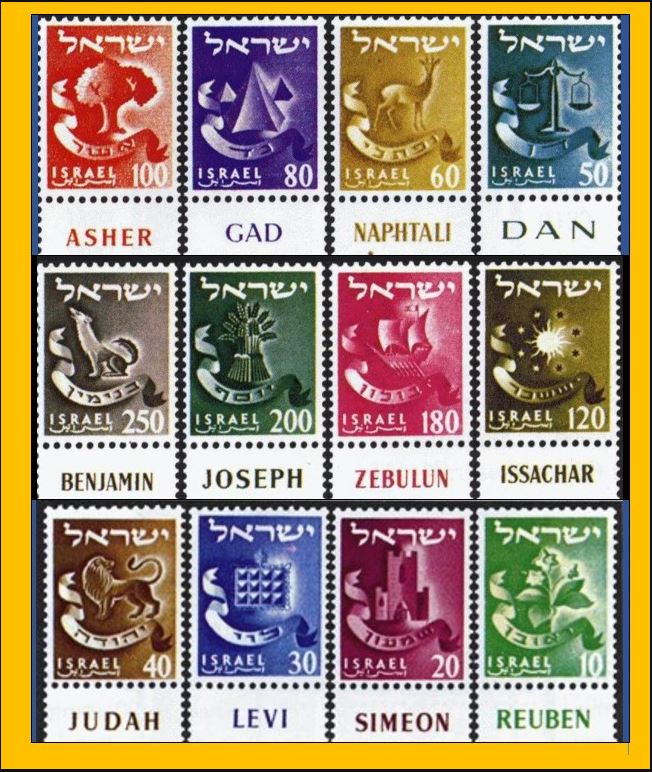




There were 12 tribes of Israel. Ten of these tribes separated and created an independent entity referred to in the Bible as "Israel" (when juxtaposed to "Judah") or as "Samaria" (in Hebrew "Shomron"), or as "Ephraim" after its leading Tribe.
The Ten Tribes lost conscious awareness of their ancestry and moved to Europe. They are often referred to as "The Lost Ten Tribes of Israel."
From Europe they eventually populated North America and other areas.
The Book of Numbers in the Bible lists the Tribes of Israel as they came out of Egypt and camped in the Wilderness before entering the Land of Canaan.
Different Listings of the 12 Tribes may be found at:
THE TWELVE TRIBES OF ISRAEL
https://www.agapebiblestudy.com/charts/THETWELVE%20TRIBES%20OF%20ISRAEL.htm
The Biblical Book of Numbers 2:3-33 gives the order of their encampment in the Wilderness.
Judah, Issachar, Zebulon, Reuben, Simeon, Gad, Ephraim, Manasseh, Benjamin, Dan, Asher, Naphtali.
This order has some significance concerning the location of the descendants of these tribes in our own time.
Here are the family precedental arrangement.
Abraham. Isaac, and Jacob were the forefathers.
Jacob was renamed Israel.
Jacob had 4 wives. Out of these wives:
Leah and Rachel were sisters.
Zilpah was the maidservant of Leah,
Bilhah was the maidservant of Rachel.
Reuben
Simeon
Levi
Judah
Zebulon
Issachar
were the six sons of Jacob and Leah.
Asher
Gad
were the sons of Jacob and Zilpah the maidservant of Leah.
Joseph
Benjamin
were the sons of Jacob and Rachel.
Joseph married Asenath from whom he begat Manasseh and Ephraim.
Dan
Naphtali
were the sons of Jacob and Bilhah the maidservant of Rachel.
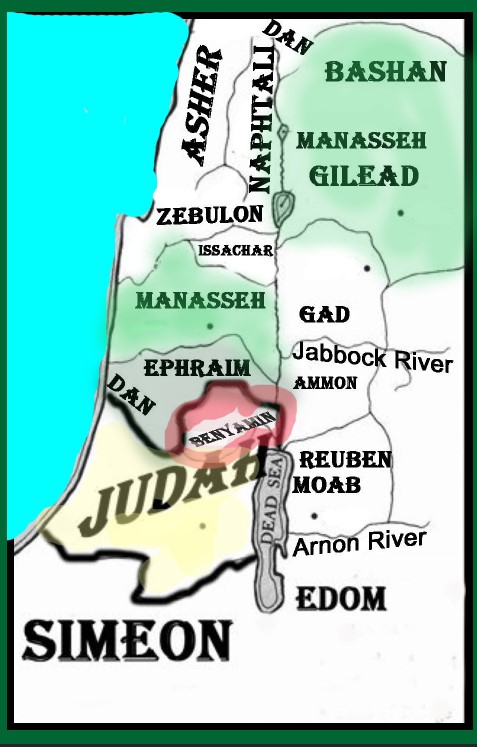
There were actually 13 Tribes but a quorum of 12 is maintained by either:
(1) counting the tribes of Ephraim and Manasseh as the one Tribe of Joseph and including Levi.
Ephraim and Manasseh were the sons of Joseph and each became a Tribe in its own right.
Alternately
(2) Ephraim and Manasseh are counted as separate Tribes and Levi is not counted.
Levi was a Tribe of Priests, officiates, and ministers, and was scattered among the other Tribes and did not receive its own territory.
When the Tribes divided into separate divisions most of the Levites eventually moved into the section of Judah.
Reuben gave rise to the French of France.
The Prophet Elijah had been commanded,
1-Kings (TCB) 17:9 "ARISE, GO TO ZAREPHATH WHICH BELONGS TO ZIDON AND SOJOURN THERE. BEHOLD I HAVE COMMANDED A WIDOW THERE TO FEED YOU."
"Zerephath" was the name of a settlement to the north of Tyre in Lebanon.
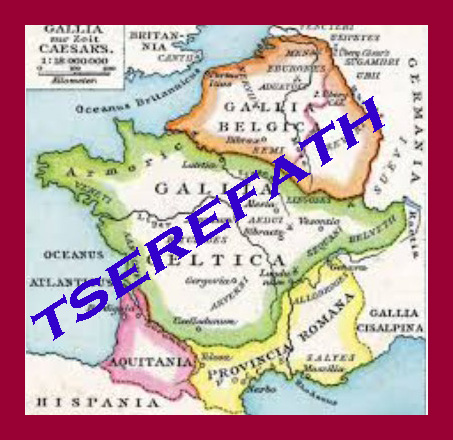
It is also known as Sarepta (near modern Sarafand, Lebanon) between Sidon and Tyre. At some early stage thius name was also applied to the region of France. The Hebrew name for France is therefore "Zerefath" ("Tserafat"),
Zarephath is also the term applied in Hebrew to the area of France and its neighborhood including in some contexts Belgium, Holland, and Britain.
This is how the relevant verse [Obadiah 1:20] is translated in the King James Version:
Obadiah (KJV) 1:20
"AND THE CAPTIVITY OF THIS HOST OF THE CHILDREN OF ISRAEL SHALL POSSESS THAT OF THE CANAANITES, EVEN UNTO ZAREPHATH; AND THE CAPTIVITY OF JERUSALEM, WHICH IS IN SEPHARAD, SHALL POSSESS THE CITIES OF THE SOUTH."
According to the Commentators, in the above verse "Canaanites" means Germany, "Zarephath" means France, or France and Britain, or France and the region to the north of France, or all of the said areas together. Sepharad means Spain. The verse should be rendered from the Hebrew original and in accordance with the Major Commentators as the following:
Obadiah 1:20 (Major Commentators)
AND THIS FIRST EXILE OF THE TEN TRIBES OF ISRAEL [Rashi] WHO DWELL FROM GERMANY [=CANAANITES, Iben Ezra] AND HOLLAND [Jewish sources quoted by Calvin], EVEN UNTO FRANCE [=ZAREPHATH, Rashi, Iben Ezra, Radak, Abarbanel, Daat Sofrim] AND ENGLAND [= ZAREPHATH, Abarbanel] AND THE CAPTIVITY OF THE JEWS OF JERUSALEM IN SPAIN [=SEPHARAD, Targum Yehonatan] SHALL POSSESS THE CITIES OF THE SOUTH.
Bible Codes for "Zarephath" show it (at intervals of 17) to be intertwined with Reuben and the Clans of Reuben, especially those of Hanoch and Palu (Numbers 26:4).

https://www.britam.org/codesarticles/CodesFrance.html
The Jewish Biblical commentator RASHI (1040 - 1105 on The Book of Obadiah)
stated that the Lost Ten Tribes of Israel migrated into Zarephath. Rashi
identified Zarephath with the Land of France while Don Isaac Abarbanel
equated "Zarephath" with both France and England together.
In the time of Rashi France and England were indeed more or less one
cultural continuum. Nachmanides (1194-1270, in "The Book of Redemption") considered
the term "Zarephath" to encompass all of the Northwest European region.
Nachmanides emphasized that the Lost Ten Tribes were still in his time in
those regions and that they were destined to wage war against the forces of
'Edom' as predicted in the Bible.

Rashi (Rabbi Solomon ben Isaac, 1040 - 1105, Champagne, France):
"THE FIRST EXILE OF THE CHILDREN OF ISRAEL WHO WERE EXILED FROM THE TEN TRIBES TO THE LAND OF CANAANITES UNTO ZAREPHATH...THE EXEGETES SAY THAT ZAREPHATH MEANS THE KINGDOM CALLED `FRANCE' IN COMMON LANGUAGE.."
i.e. Rashi says that the Lost Ten Tribes are in France!
Iben Ezra, Abraham (1092 1167, Spain):
" `..FROM THE CANAANITES': WE HAVE HEARD FROM GREAT MEN THAT THE LAND OF ALLEMAGNE [i.e. Germany] ARE THE CANAANITES WHO FLED FROM BEFORE THE CHILDREN OF ISRAEL WHEN THEY CAME INTO THE LAND. SO TOO, ZERAPHATH MEANS FRANCE...",
Ramban (Nachmanides, Rabbi Mosheh ben Nachman, 1194-1270, Spain; from "The Book of Redemption", chapter 1.):
"THE VISION OF OBADIAH ..THE HOUSE OF JOSEPH REFERS TO THE TEN TRIBES ...WHO WERE EXILED AND STILL ARE IN THEIR PLACE OF EXILE, THE EXILE OF ZAREPHATH AND CANAAN, WHICH ARE IN THE FARTHEST NORTH..."
The Commentary "KLI YAKAR" (A Valuable Tool) by Rabbi Shlomo Ephraim ben Aaron Luntschitz (1550 - 1619) who served as the Rabbi of Prague from 1604-1619 says the following concerning Reuben and these remarks are also pertinent to the French in history:
# REUBEN WAS AN HEROIC WARRIOR IMPARTING STRENGTH AND POWER TO THE PEOPLE. TO ACHIEVE HIS VICTORIES REUBEN WILL REQUIRE OVERWHELMING NUMBERS AND GREAT MARTIAL QUALITIES. THIS WILL BE GIVEN UNTO HIM BUT NOT TO A SUFFICIENT DEGREE TO ACQUIRE PRE-EMINENCE OVER HIS BROTHERS. THE BLESSING OF PEACE WILL ALSO BE GIVEN TO HIM AND AN EQUAL STANDING WITH HIS BROTHERS BUT NOT MORE THAN THAT. # Source: "Kli Yakar".
REUBEN = FRANCE
Don Isaac ben Yehudah Abarbanel, (1437-1508, Spain) has a somewhat different explanation than the others. On some points his commentary is worthy of consideration in the light of the above:
"ZERAPHATH IS FRANCE AND SO TOO THE EXILE OF SEPHARAD IS SPAIN..AND LET YOU NOT ERR JUST BECAUSE ZERAPHATH [i.e. France] IS SPOKEN OF AND ANGLETERRE [i.e. England] IS NOT RECALLED, FOR THERE TOO DID THE EXILES GO, FOR LO AND BEHOLD, THAT ISLAND IS CONSIDERED A PART OF ZAREPHATH AND IN THE BEGINNING BELONGED TO IT AND IN THEIR ANCIENT BOOKS THEY CALL IT THE ISLE OF ZAREPHATH [i.e. of France] EVEN THOUGH IT LATER SEPARATED ITSELF FROM ZAREPHATH [FRANCE] AND BECAME A KINGDOM IN ITS OWN RIGHT." Abarbanel.
Numbers (2:3-33} gives the marching order of the Tribes in the wilderness. The section of Reuben is in the south together with Simeon and Gad.
France was eventually conquered by the Franks. The branch of the Franks that led the conquest were known as "Ruipuari" which has been understood as coming from the Latin and connoting "River-bank'. Alternate forms of this name however were "Rubi" and "Ribuari" both derivable from the name Reuben.
Reuben marched togather with Simeon and Gad.
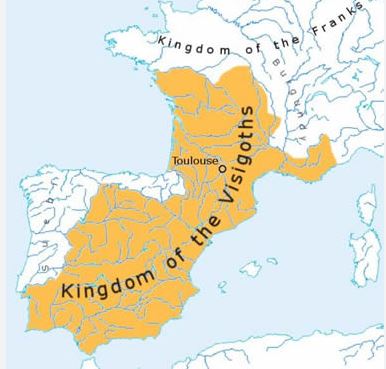
We identify Gad with the Goths and related peoples of Scandinavia. In Ancient Hebrew the name "Gad" and "Goth" were interchangeable. The Goths of history were also referred to as "Goti" and as "Gadi". A portion of the Goths also settled in France.
The Goths were also in southern France. The area around Narbonne was referred to as "Gothia".
And we also had the Gadeni in Scotland.Prior to the Frankish conquest France had been known as Gaul and was divided into Gauls, Galatae, and Belgae. The Gauls were also known as Gali and their name is reminscent of Gaulanitis in northern Israel, east of the Jordan near the region of Rueben. The Galati have a name similar to that of the Gileadi in north-east Israel while the Belgie may have been descedned from "Bela(g)h" son of Benjamin (Genesis 46:21:7). . Groups of Belgae were also present in southeast Ireland and in southern England.
Irish mythology recalled among their ancestors the Semueni (Simeon) son of Isru (Israel), Ptolemy recorded the Samnetes of Simeon in Brittany, France. They neighbored the Namnetes from Nemuel of Simeon (Numbers 26:12). In Eastern Britain we find the Semeni of Simeon and the Iceni of Yachin from Simeon (Numbers 26:12).
It had been prophesied that Simeon would be dispersed (along with Levi) amongst the rest of Israel (Genesis 49:7).
In the Land of Israel Reuben adjoined the area of Moab. Descendants of Moab may have moved to Spain which today adjoins France.