
- Background Information of Interest and Importance 22 June 2026, 8 Tammuz 5786.
Lebanon - Background Information.
Sources: Mainly Wikipedia Articles.
Contents:
1. Bible.
2. DNA
3, Geography
4. History.
^^^^^^^^^^^^^^^^^^


C


1. Bible.
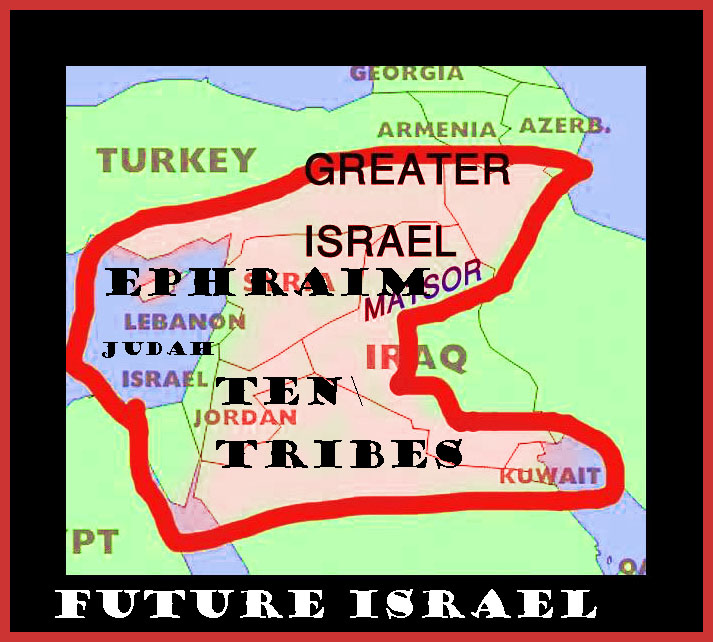
Scripture includes Lebanon as being within the Promised Land.
Deuteronomy (TCB) 1:
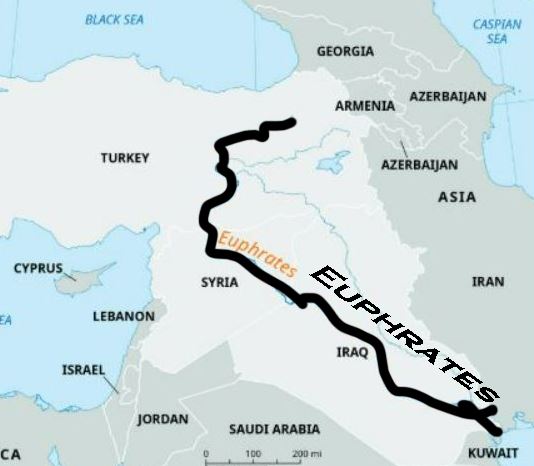
7 TURN AND JOURNEY, AND COME TO THE MOUNTAIN OF THE AMORITES AND TO ALL ITS NEIGHBORING PLACES, IN THE PLAIN, ON THE MOUNTAIN, AND IN THE LOWLAND, AND IN THE SOUTH AND BY THE SEASHORE, THE LAND OF THE CANAANITES, AND THE LEBANON, UNTIL THE GREAT RIVER, THE EUPHRATES RIVER.
Deuteronomy (TCB) 3:
25 PRAY LET ME CROSS OVER AND SEE THE GOOD LAND THAT IS ON THE OTHER SIDE OF THE JORDAN, THIS GOOD MOUNTAIN AND THE LEBANON.
Deuteronomy (TCB) 11:
24 EVERY PLACE UPON WHICH THE SOLES OF YOUR FEET WILL TREAD, WILL BE YOURS: FROM THE DESERT AND THE LEBANON, FROM THE RIVER, THE EUPHRATES RIVER, AND UNTIL THE WESTERN SEA, WILL BE YOUR BOUNDARY.
Joshua (TCB) 1:
4 FROM THIS DESERT AND LEBANON TO THE GREAT RIVER, THE EUPHRATES, ALL THE LAND OF THE HITTITES TO THE GREAT SEA WESTWARD SHALL BE YOUR BOUNDARY.
Lebanon was a source of cedar wood in constructing the First Temple .which was called 'the Palace of the Forest of Lebanon' (1-Kings 5:5-6; 7:1-3). To collect the massive amount of lumber needed for the temple and palace, 30,000 Israelite men were conscripted and sent to Lebanon for one month at a time (1-Kings 5:13-14). Hiram, king of Tyre, had his workers cut the trees, haul the logs to the sea, and float them to a place where Solomon's men could collect them (1-Kings 5:8-9).
"The glory of Lebanon will come to you, the juniper, the fir and the cypress together, to adorn my sanctuary; and I will glorify the place for my feet" (Isaiah 60:13).
"Lebanon is mentioned 71 times in the Bible, primarily as a symbol of majesty, strength, and divine blessing."
Most of Lebanon was apportioned to the Israelite Tribe of Asher. Dan and Naphtali were also involved. So too, at a later date in the north were to be found elements from Judah, Reuben, and Gad,
^^^^^^^^^^^^^^^^^^
2. DNA
A UK-based study of ancient genomes finds Canaanites form over 90% of modern Lebanese ancestry, a trait they share with ancient Israelites
https://www.timesofisrael.com/the-canaanites-werent-annihilated-they-just-moved-to-lebanon/
These results in our opinion are unreliable but perhaps worth (for the time being) keeping in mind.
^^^^^^^^^^^^^^^^^^
3, Geography
Lebanon borders on Israel to the south and is near Cyprus to its west. To the north and east of Lebanon is Syria.
Lebanon has a population of more than five million and an area of 10,452 square kilometers (4,036 sq mi). Beirut is the country's capital and largest city.
There are four longitudinal strips between the Mediterranean Sea and Syria:
1. The coastal strip (or the maritime plain).
2. Western Lebanon.
3. The central plateau.
4' Eastern Lebanon.
Lebanon has a Mediterranean climate characterized by a long, hot, and dry summer, and a cool, rainy winter.
Inhabitants of the coastal cities, as well as visitors, seek refuge from the oppressive humidity of the coast by spending much of the summer in the mountains, where numerous summer resorts are located.
Temperatures are rising in Lebanon as a part of global warming. Lebanon is considered to be part of the Fertile Crescent, yet in the meantime with the severe climate changes, it might lose fertility.
According to the Ministry of Environment, several factors that are putting stress on Lebanon's water resources are unsustainable water management practices, increasing water demand from all sectors, water pollution, and ineffective water governance.
88% of the population now lives in urban areas
Current environmental degradation concerns include deforestation, soil erosion, desertification, air pollution in Beirut from vehicular traffic and the burning of industrial wastes, and pollution of coastal waters from raw sewage and oil spills.
Major cities in Lebanon.
Beirut is the capital and the largest city.
In the Center and Mount Lebanon in addition to Beirut we also have Jounieh and Byblos.
In the north we have
Tripoli: The second-largest city in the country, serving as the economic engine of the North.
Batroun:
Zgharta:
Bsharri:
In south Lebanon we have Sidon (Saida),
Tyre: An ancient Phoenician city and a UNESCO World Heritage site known for its well-preserved Roman hippodrome and stunning sandy beaches.
Nabatieh:
Bekaa Valley & Baalbek-Hermel we have Baalbek: Located in the heart of the Bekaa Valley, this city is globally renowned for its remarkably preserved ancient Roman temples (including the Temple of Bacchus).
and Zahle.:
Lebanon was populated by a mixed population of Shiite Muslims (mostly in the south), Sunni Muslim, Druze, and Christians (mostly Maroninte Cathoics).
^^^^^^^^^^^^^^^^^^
4. History
Lebanon was the homeland of the Phoenician People. The Phoenicians also founded the city of Carthage in what is now Tunisia in North Africa. The Phoenicians did not identify themselves as "Phoenician" but rather as "Canaanite."
"Modern scholarship generally views the distinction between Canaanites and Phoenicians after c. 1200 BC as artificial."
The Phoenicians influenced the Ancient Greeks and founded several of the Greek cities. They also founded settlements in Italy, Sicily, Spain, and Britain, and North Germany. The Phoenician Alphabet is that of the Ancient Hebrews. It gave rise to the alphabet (adapted by the Greeks and Romans) we use today
Tyre and Sidon were the two major Phoenician centers.
Lebanon was originally dominated by the Phoenicians. Then came the Romans from 64 BCE followed by the Christian Byzantines (Eastern Romans), then from 600s CE different Muslim Arab groups. In the 1000s CE there were Christian Crusader States.
This was followed by Muslim Ayubids 1171-1260 (who were of Kurdish origin but based on Egypt). They were followed by the Mamleks 1250-1570 (Muslim Slaves of Caucasian origin who had been kidnaapped and islamicized as Children) also based in Egypt.
Meanwhile in the early 1000s CE the Seljuk Turks from North Asia followed by the Ottomans overtook the mainland area of Anatolia. They imposed their language and ethnicity on the locals who nevertheless ethnically still comprise ca. 80% of the Turkish Population.
In 1516 they conquered Lebanon.The Ottomans, through the Maans, a great Druze feudal family, and the Shihabs, a Sunni Muslim family that had converted to Christianity, ruled Lebanon until the 1850s.
Lebanon and Syria were in effect at the local level ruled by autonomous local families.
In 1840 in Syria the Damascus Affair (a Blood Liberal) against the Jews in Syria caused increased Western interest in the region.
Bashir-2 (1788-1840) an emir from the Shihab dynasty in the Druze and Maronite districts of Mount Lebanon ruled over over Mount Lebanon in Ottoman Syria though nominally still under Ottoman control. He was the only Maronite Christian ruler of the Mount Lebanon Emirate.
Bashir-2 was allied with Mahomat Ali who attempted to set up a quasi independent entity in Lebanon and Syria, Nominally Mohamad Ali was subservient to the ruler of Egypt who in turn was ruled over by the Ottoman in Turkey,
A European alliance consisting of Great Britain, Prussia, Russia and Austria (but lead by Britain) backed the Ottomans and demoted Mohamat Ali.
After these events the 1860 Christian-Druze war, in Mount Lebanon during Ottoman rule in 1860 - 1861 fought mainly between the local Druze and Christians. The fighting precipitated a French-led international military intervention.
Around 10,000 Christians had been killed by the Druze.
The French established an alliance with the Lebanese Christians, while the Druze formalized an alliance with the British, allowing them to send Protestant missionaries into the region.
During this period Turkey was nominally in control. Within Turkey from 1913 the Young Turks (CUP - Committee of Union and Progress) took dictatorial control though the Ottoman Sultan remained nominally in charge.
The CUP engaged in genocide against Christian Armenians, Christian Assyrians, and Christian Greeks.
The Great Famine of Mount Lebanon 1915 and 1918, that resulted in the deaths of more than 200,000 people, most of whom were Maronite Christians. This accounted for about half the Maronites alive at that time.
The famine was caused by a combination of factors including Jamal Pasha, commander of the Fourth Army of the Ottoman Empire, who deliberately barred crops from neighboring Syria from entering Mount Lebanon
This was compounded by the Allied blockade of the Eastern Mediterranean and a great swarm of locusts.
During this period there had been ample grain and wheat in nearby Damascus in Syria .
Turkey along with its German and Austrian allies was defeated in World War-1.
The Treaty of Sevres would break up the Ottoman Empire and force large concessions on territories of the Empire in favour of Greece, Italy, Britain and France. On 1 November 1922, the Turkish Parliament in Ankara formally abolished the sultanate.
During the two years that followed the end of the war in 1918, and in accordance with the Sykes-Picot Agreement signed by the United Kingdom and France during the war, the British held control of most of Ottoman Iraq (now Iraq) and the southern part of Ottoman Syria (now Israel, Palestine and Jordan), while the French controlled the rest of Ottoman Syria (including Lebanon, Alexandretta, and portions of Cilicia). In the early 1920s, British and French control of these territories became formalized by the League of Nations' mandate system. And on 29 September 1923 France was assigned the League of Nations mandate of Syria, which included the territory of present-day Lebanon and Alexandretta in addition to modern Syria.
Alexandretta is now known as Iskenderun and as the district of Hatay Province, Turkey. "Hatay" means "Hittite. " The name was changed to emphasize its Turkish (non-Arabic) character It was forcibly united with Turkey in 1939, The Turks had been the largest minority group in the region but comprised only ca. 30% of the total population.
Within Turkey a successful Turkish War of Independence, led by Mustafa Kemal Ataturk against the occupying Allies, led to the end of the Ottoman sultanate in 1922.
Just for the record today (2026) in modern "Progressive" Turkey under Erdogan millions of citizens live below the starvation line due to high inflation and a plunging currency.
Under the Sykes-Picot agreement of 1916 at the end of World War-1 Irak, and what is now Jordan, and Palestine went to the British.
Lebanon came under the "Mandate for Syria and the Lebanon", administered by France, which established Greater Lebanon.
The 1940 Armistice: When France surrendered to Germany in 1940, the French forces in the Levant sided with the Vichy pro-Nazi Government in France. In May 1941, the Vichy authorities allowed Nazi Germany to use airfields in French-controlled Syria and Lebanon to fuel and launch strikes on Allied-controlled Iraq.
To prevent more attacks from the Axis, the Allied forces attacked Syria and Lebanon. The Australian, Indian, and Free French troops advanced from Mandatory Palestine while British and Indian troops advanced from Iraq. One month later, the Vichy French forces surrendered and Syria and Lebanon were under Allied control.
Free French soldiers had actually fought against their fellow colonial French countrymen who remained loyal to Vichy.
The Vichy French forces surrendered in July 1941, bringing the territory under Free French and British administration.
In November 1941, Free French General Georges Catroux proclaimed the independence of Lebanon.
See Also:
Before the State of Israel.
https://hebrewnations.com/articles/zionism/before.html
Lebanon and Syria
https://hebrewnations.com/articles/bible/syria.html