
The Names of Israel no.3. 21th October 2026, 10 Cheshvan 5787.


JUDAH AND THE JUTES
Ancestors of some of the English were Jews of Judah!
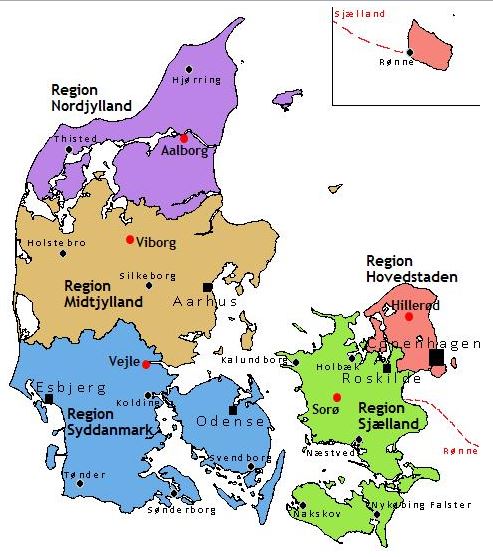
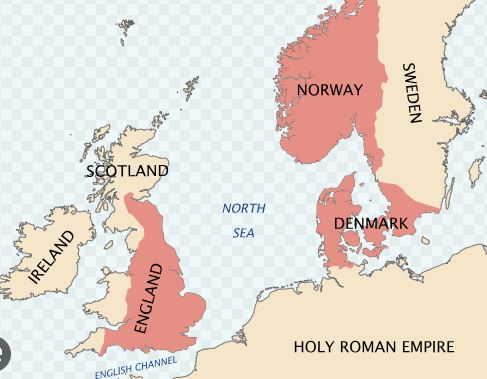
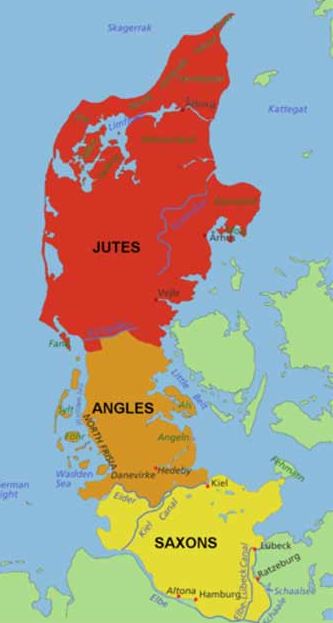
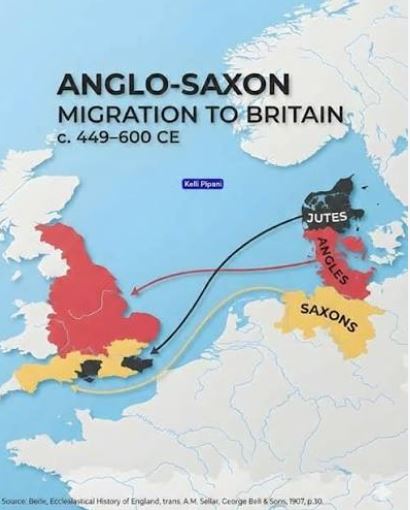
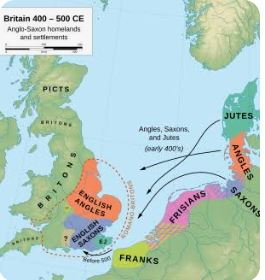
Judah, the first tribe, became the Jews. The term 'Jew' is derived from 'Judah'. After the death of King Solomon the tribes divided into 'Israel' (the ten Tribes) and the Kingdom of Judah. The Kingdom of Judah was built around the Tribes of Judah, Benjamin, and Levi. Minority Segments of other Tribes existed within the Kingdom of Judah. Most of Judah remained with the Jews. Nachmanides (1194-1270, in the 'Book of Redemption') explains that these other Tribes were to receive their Tribal expression in Exile as part of the Lost Ten Tribes. Here and there minority sections of Judah split off. Some of them were exiled by the Assyrians in addition to the 10 Tribes (2-Kings 18:13). Sennacherib the king of Assyria boasted of taking more than 200,000 people from Judah into Exile. [These exiles from Judah may actually have been Simeonites from Simeon.] The Kingdom of Judah in the south was centred on the tribes of Judah, Benjamin, and Levy, but other tribes were also present]. At all events small contingents from Judah in one way or another became attached to the Lost Ten Tribes. One of these became the Jutes. The name 'Jute' in Northern dialects means 'Judah'. The Jutes at first were in Jutland in Denmark. From there they moved with the Angles and Saxons to the south of England.
Judah in the north.
Before their Exile the tribes had each received an inheritance within the Land of Canaan, see the Books of Joshua and Judges. The borders described left many areas left over. These were intended to be re-distributed to the Tribes later as described by the MALBIM (1809-1879). One of these areas included a section in Northern Syria and southeast Turkey (Cilicia) part of which was given to Judah and another to Dan.
The area given to Judah is mentioned in the Bible under the term:
"Hamath which belonged to Judah."
Hamath
2 Kings 14:28 NOW THE REST OF THE ACTS OF JEROBOAM, AND ALL THAT HE DID, AND HIS MIGHT, HOW HE WARRED, AND HOW HE RECOVERED DAMASCUS, AND HAMATH, WHICH BELONGED TO JUDAH, FOR ISRAEL, ARE THEY NOT WRITTEN IN THE BOOK OF THE CHRONICLES OF THE KINGS OF ISRAEL?
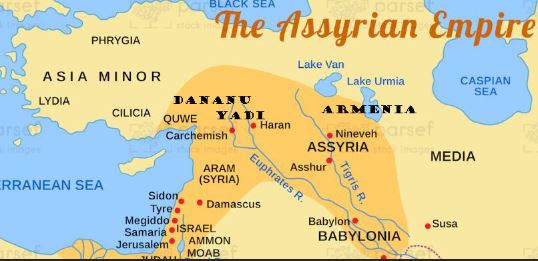
The text is referring to the area of Yadi (also referred to as Yati) which was to the north of Hamath in northern Syria.
After the death of King Solomon the Northern Kingdom of Israel had separated from Judah. Its first king was Jeroboam-1. Then came Nadab, Baasha, Elah, Zimri, Omri, Ahab, Ahazariah, Jehoram, Jehu, Jehoahaz, Jehoash, Jeroboam-2, Zechariah, Shallum, Menachem, Pekahiah, Pekah, Hoshea.
Jeroboam-2 (Jeroboam son of Jehoash), had been the successor of Jehoash of the ancient Kingdom of Israel, over which he ruled for forty-one years. His reign was contemporary with those of Amaziah and Uzziah, kings of Judah. Jeroboam-2 is the fourth king of the House of Jehu and the longest-reigning king of the separated kingdom of Israel in Samaria. He is described as a military commander who fought Syria.
Jeroboah restored HAMATH, WHICH BELONGED TO JUDAH. This apaprently had previously been conquered by the Aramaeans (Syrians) and was later liberated by Jeroboam-2 the King of Israel. "Hamath that belonged to Judah" is the area of Yadi that Judah had received to settle its excess population.
Eventually both Yadi (Yehudah of Hamath) and Smal of the Dananu were conquered by the Assyrians and their inhabitants exiled to Urartu (Armenia).
Judges chapter 18 describes the initial conquest of Liash (Luas, i.e. Smal) by the Tribe of Dan. See:
Dan and the Serpent Way. This area was also known as Smal. At times both Yadi and Smal were ruled by the same ruler and the two could be conflated. Both areas were later conquered by Assyria and its inhabitants exiled to Urartu (Armenia).
They became the Jutes and Danes a portion of whom participated in the Anglo-Saxon invasion of England.
The previous inhabitants of southern England with whom the Jutes conquered and intermixed had previously also arrived from the area of Armenia and were of the same ancestral stock. In the opening of the 'Anglo-Saxon Chronicle' (800s CE) it states that the first inhabitants of Britain, the Britons, "came from Armenia, and first settled in the south of Britain". The Jutes were later to settle in that same portion of England and intermix with the previous inhabitants.
A Latin chronicle from the 1400s, "Chronicon Holsatiae vetus", found in Gottfried Leibniz's "Accessiones Historicae" (1698), states the Danes were of the Tribe of Dan, while the Jutes were the Jews, and the Angles their brothers. Henry Spelman in 1620, also said that the Danes were the Israelite Tribe of Dan.
We also have the IARI or descendants of Yair (Jair) who was associated with both Judah and Manasseh and was in the northern area. Yair from the Tribe of Manasseh intermarried with the Tribe of Judah. In Ireland and Scotland, we find a group known as the Iari (i.e. from Yair) associated with the both Judah and Manasseh. Irish sources also speak of other elements from Judah settling among them.